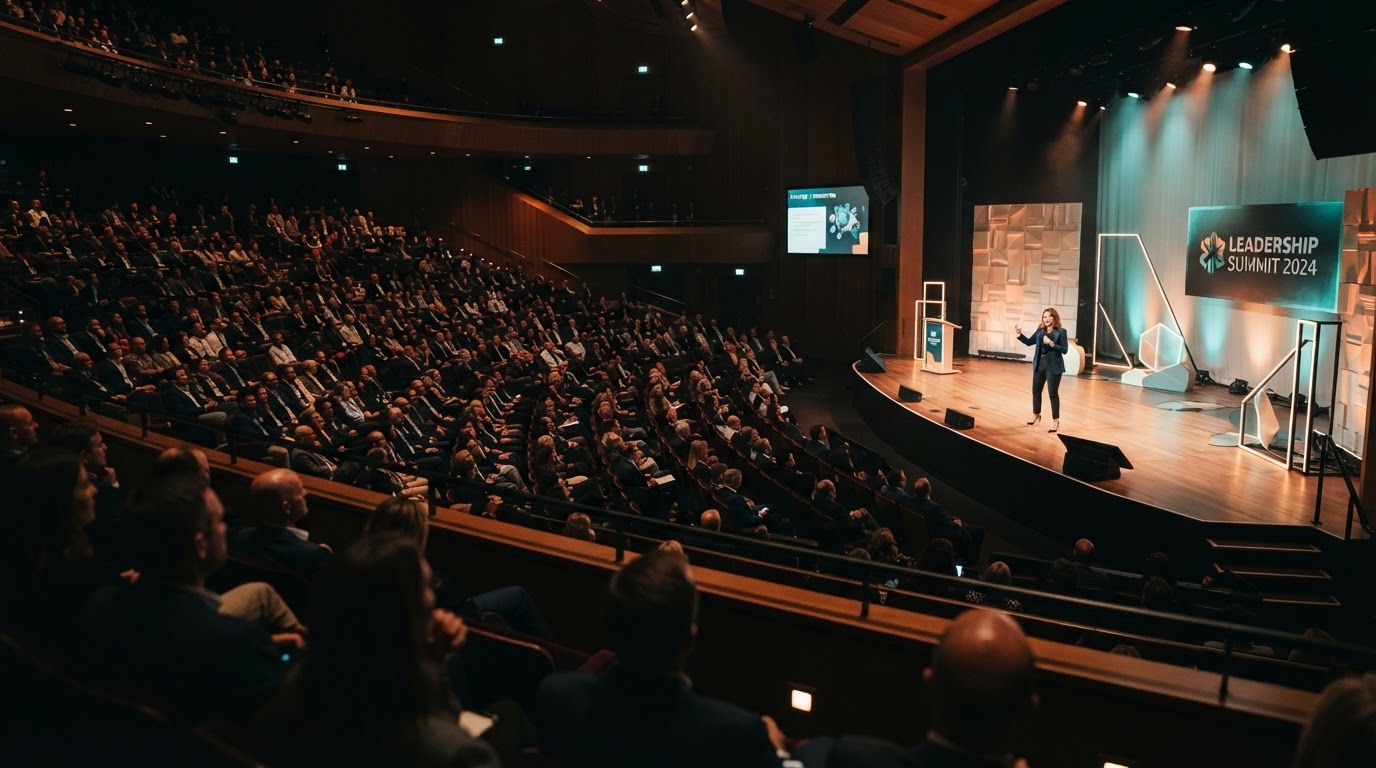
The room was full. The production was flawless. The speakers landed and people left with the kind of energy every event team hopes to create.
Then Monday arrived.
Calendars filled. The inbox took over. Leaders returned to teams that had not been in the room and needed to know what any of it meant for them.
This is where the real measure of a leadership event begins.
A great day is not the same as a useful event
Leadership events are often measured through the things closest to the event itself. Attendance. Production quality. Speaker ratings. The energy in the room. The survey completed on the way out.
Those signals matter. A badly run event can distract people from even the strongest content. But immediate reaction tells us very little about whether the event changed what leaders understand, say or do.
An event can be enjoyable without being consequential. It can create a powerful emotional high that disappears as soon as normal work resumes.
The more useful question is not 'Did people like it?' It is 'What should be different because these people were in this room together?'
Start with the shift, not the stage
Before the venue, agenda or speaker list, be clear about the shift the organisation needs.
Do leaders need to explain a new strategy in language their teams can use? Do they need to make different decisions? Build trust after a difficult period? Work across boundaries that have become too rigid? Let go of an old way of thinking?
The answer should shape the whole experience.
If the goal is clarity, leaders need time to test the story and practise telling it. If the goal is connection, the room needs more than networking between presentations. If the goal is different behaviour, people need to work with real choices and tensions, not simply hear someone describe the desired future.
Production should carry the purpose. It cannot create one that has not been defined.
Before the event. Create readiness
The experience begins well before people arrive.
What leaders hear beforehand tells them whether this is another date in the calendar or a moment that deserves their attention. A thoughtful lead in can create curiosity, surface the questions already in the organisation and give people a reason to arrive ready to participate.
This does not require an elaborate campaign. It requires useful choices. A short provocation from the leader. One question discussed with teams before the event. A piece of insight that shows why the conversation matters now.
The goal is not to reveal every answer. It is to make the room ready for the work.
During the event. Design participation, not passive attention
People can only absorb so many presentations, no matter how good the speakers are.
The strongest leadership events create rhythm. They move between listening, discussing, testing, reflecting and deciding. They make space for people to connect the organisational story to the reality they will face back with their teams.
Participation does not mean filling the agenda with activities. It means giving people a meaningful role in the experience.
Ask them to work with a real business tension. Let them hear perspectives they do not normally encounter. Give them language, tools and choices they can use. Create moments that are emotionally memorable because they reveal something true, not because they are theatrical for the sake of it.
People commit more deeply to what they have had a hand in making sense of.
After the event. Protect the return to work
This is the part most often left to chance.
Leaders leave with good intentions and return to full calendars. Without a clear bridge into the next conversation, the event becomes a memory rather than a source of movement.
Before people leave the room, they should know what happens next. What conversation do they need to have? What decision should they revisit? What commitment have they made? What support will they receive?
The first few days matter. Give leaders something they can use immediately with their teams. Keep it concise. Make it sound like a human conversation rather than a cascade pack. Then create a rhythm that brings leaders back to the commitments they made and lets the organisation see what is changing.
Reinforcement is not repeating the event content. It is helping people apply it.
Measure what moved
Ask whether leaders enjoyed the experience, but do not stop there.
Can they explain the strategy more clearly? Do they feel equipped for the next team conversation? Have they changed a decision, a meeting or a behaviour? Are teams hearing a more consistent story? Is the organisation seeing movement in the areas the event was designed to influence?
Some of this can be measured quickly. Some will emerge over time. The important thing is to connect measurement to the purpose defined at the beginning.
The room is the moment. The work is what follows
Leadership events have a rare advantage. They gather attention, emotion and collective energy in one place. In organisations where everyone is pulled in different directions, that is valuable.
But an event should not sit beside the change as a celebration or communication channel. It should be designed as part of the change itself.
So plan the room beautifully. Care about the stage, the story and every detail of the experience.
Then care just as much about Monday.
Jayne Butler
Client Strategy Director at Bunch
Bunch is the people side of change. When organisations change direction, restructure, roll out new tech, or shift culture, we make sure their people change with them. Twenty years, four integrated capabilities, one senior team.